Key Points in This Blog
- Asbestos waste needs specialist disposal.
- Never put asbestos in household or general waste bins.
- Asbestos must be correctly wrapped, sealed and labelled.
- Waste must go to a licensed disposal facility.
- Correct transport and waste documentation are required.
Asbestos disposal guide: What you need to know
This our 10-step guide on Asbestos waste disposal
This guide explains the main considerations when arranging professional asbestos waste collection and disposal.
Asbestos waste requires specialist handling, suitable packaging and an authorised disposal route. It must not be placed in household bins or mixed with general waste. The arrangements depend on the type, condition and quantity of material involved. If asbestos still needs removing from the building, this work must be assessed separately from its collection and transport.
Step 1: Identification:
Confirm the presence of asbestos in your property, especially before any refurbishment or demolition activities. This can be done by having an asbestos survey carried out.
Step 2: Safe Handling:
Avoid disturbing suspected asbestos waste. A competent contractor should assess its condition and select suitable controls to minimise fibre release during handling and collection.
Step 3: Avoid Regular Bins:
Do not dispose of asbestos in regular bins or wheelie bins to prevent environmental contamination.
Step 4: Suitable Packaging:
Asbestos waste must be appropriately double-bagged or double-wrapped and labelled. The packaging must suit the material’s size and condition. Large sheets should not be broken into smaller pieces simply to fit them into bags. Ask your contractor to arrange appropriate packaging.
Step 5: Professional Assistance:
When asbestos is discovered during activities like demolition, consult a professional asbestos removal contractor for safe removal.
Step 6: Authorised Waste Facilities:
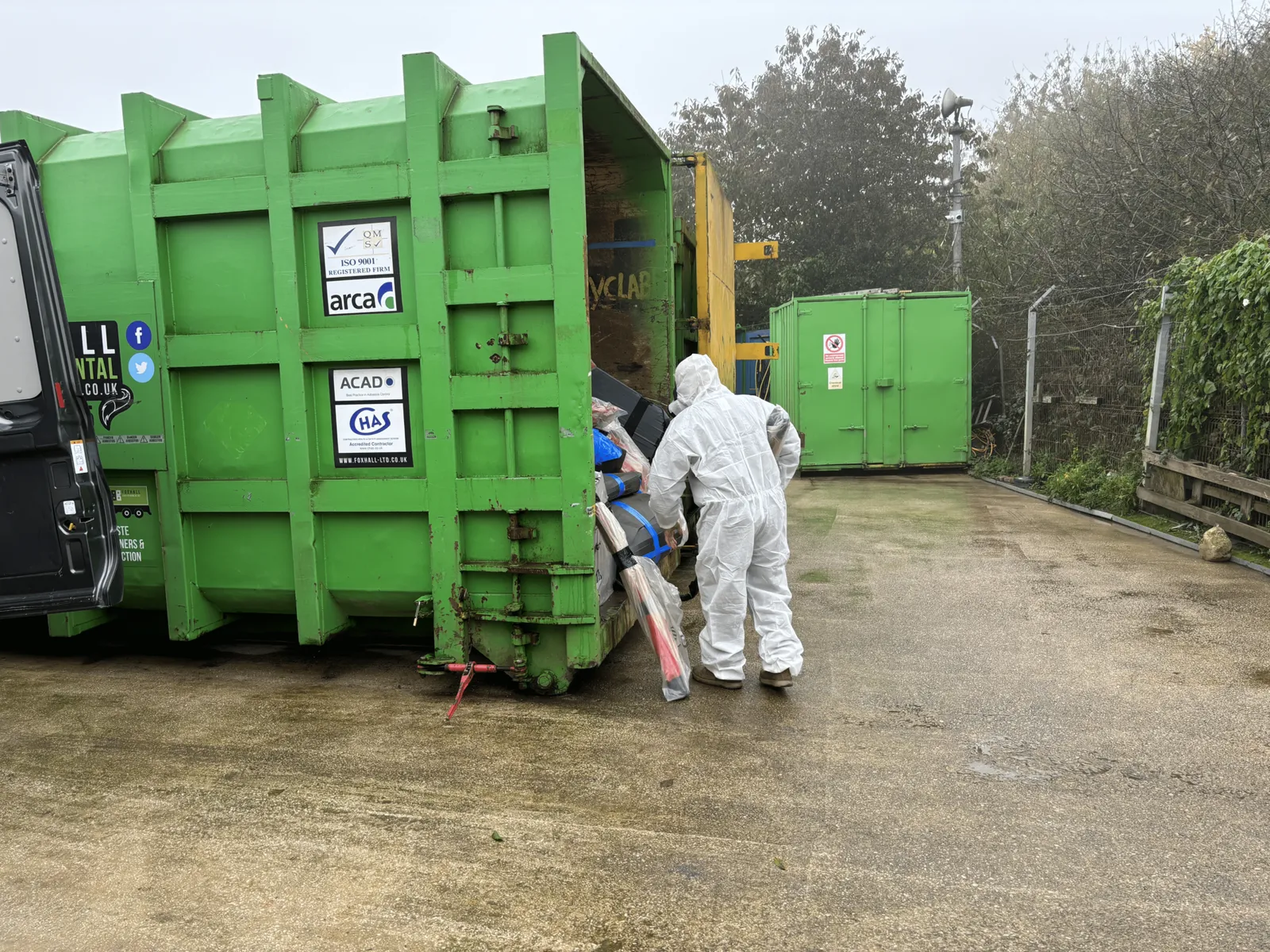
Asbestos waste must go to a facility authorised to accept it. This may be an authorised waste transfer station before onward disposal, or an appropriate disposal site. Not every recycling centre or waste facility accepts asbestos.
Step 7: Expert Guidance:
If unsure about the disposal process, seek expert guidance to navigate through the steps. We can guide you through all the correct processes.
Step 8: Suitable Asbestos Skips:
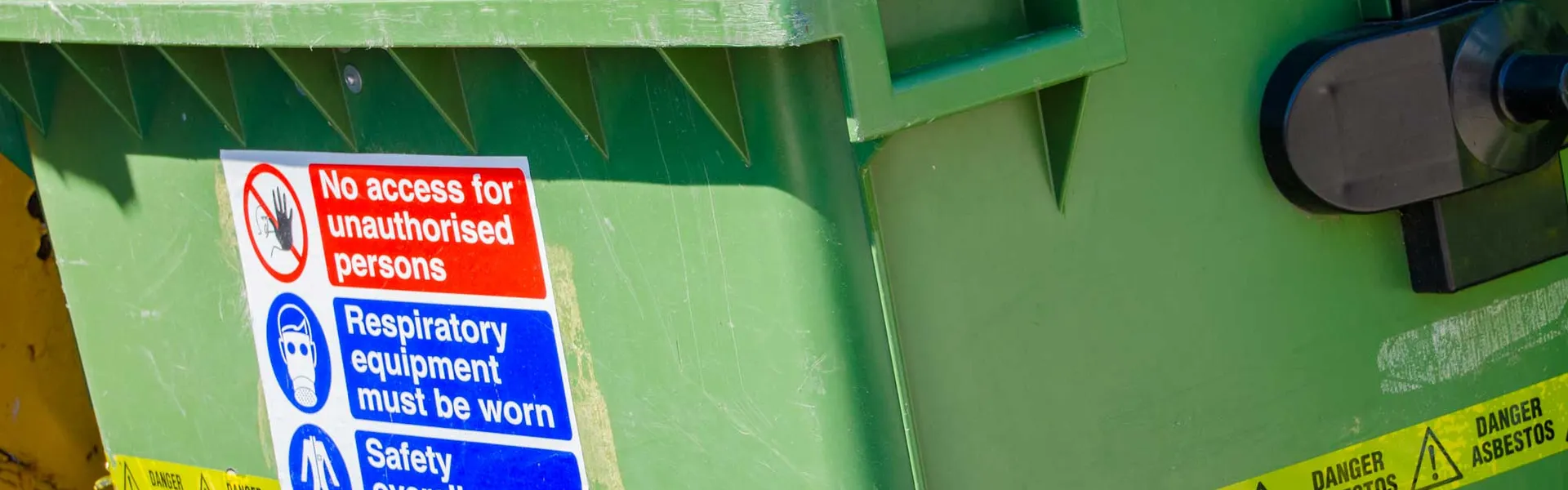
Where a skip is required, use a suitable enclosed, lockable asbestos-waste skip arranged through your contractor. An ordinary open skip covered with sheeting is not an adequate substitute.
Step 9: Padlocking Skips:
Always padlock skips to prevent unauthorized access and ensure safety.
Step 10: Transportation Compliance:
For professional collection in England, check that the contractor is registered with the Environment Agency to carry waste. Waste-carrier registration is separate from an HSE asbestos-removal licence and does not authorise licensed asbestos-removal work.
The collection must be supported by the required hazardous waste consignment documentation and delivered to an authorised facility. Ask for copies of the relevant collection and disposal paperwork and retain them with your property records.
Frequently Asked Questions
How do I safely identify asbestos in my property, and what steps should I take if I suspect its presence?
Appearance alone cannot confirm whether a material contains asbestos. Avoid disturbing it and contact a competent asbestos surveyor. Professional sampling may be appropriate for a particular material, while a survey may be needed to assess a wider building or work area.
Are there specific regulations or guidelines I need to follow when disposing of asbestos-containing materials, and what are the consequences of not adhering to them?
Yes, there are strict regulations governing the disposal of asbestos to mitigate health and environmental risks. Disposing of asbestos in regular bins is illegal and can lead to environmental contamination. Failure to adhere to disposal guidelines can result in fines, legal penalties, and increased health risks for individuals exposed to airborne asbestos fibres.
What are the risks associated with improper asbestos disposal, and how can I ensure that I'm taking all necessary precautions to protect myself and the environment?
Avoid handling, breaking or moving suspected asbestos waste yourself. Arrange an assessment and collection through a competent contractor. Check their waste-carrier registration, confirm where the waste will be taken and ask what documentation you will receive. If removal work is also required, the contractor must have the training and, where necessary, the HSE licence appropriate to that work.