Where can Asbestos be found?
Where can Asbestos be found?
Asbestos was used in thousands of products. Here's where to look in your property.
Asbestos in Your Home
If your home was built or refurbished before 2000, it may contain asbestos in any of these locations.
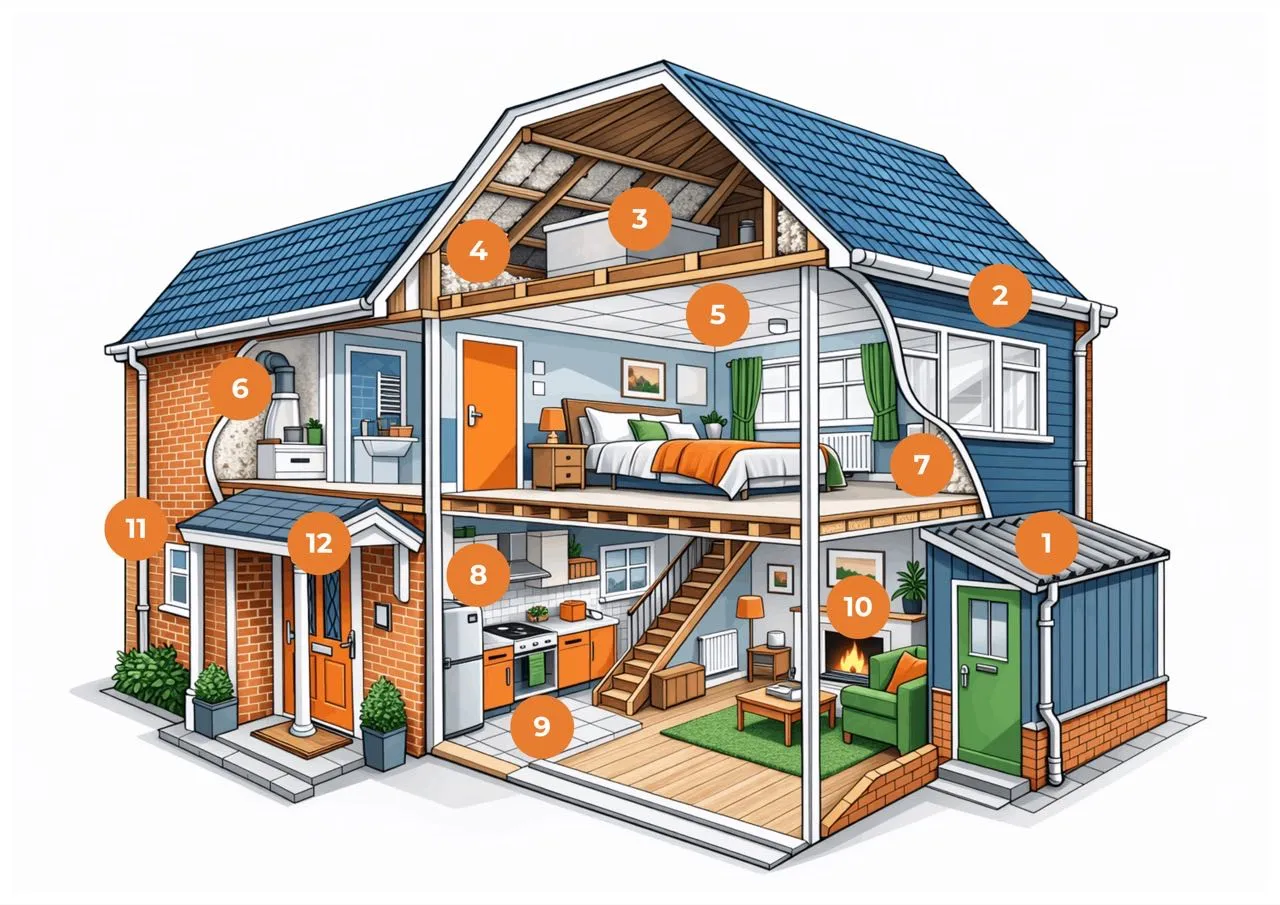
1 Corrugated Cement
Corrugated roofing sheets, often found on garages and outbuildings, commonly contain asbestos cement. These materials are generally low risk if left undisturbed but can release fibres if damaged or broken.
2 Soffits and Fascias
Soffits and fascias may contain asbestos cement or insulating board. Over time, weathering or maintenance work can disturb these materials and release fibres.
3 Water Tank
Older cold water tanks, particularly those in loft spaces, were sometimes made from asbestos insulating board. These can deteriorate with age and should be handled with care.
4 Loft Insulation
Asbestos insulation may be present in lofts, either as loose fill or insulating board. This is considered a higher-risk material due to its friability and potential to release fibres easily.
5 Insulating Board Ceiling
Ceilings constructed from asbestos insulating board (AIB) were commonly used for fire protection. These materials can release fibres if drilled, cut, or damaged.
6 Boiler Flue Pipe
Flue pipes connected to older boilers often contain asbestos cement or insulation. Deterioration or removal works can pose a risk if not properly managed.
7 Wall Cavity Insulation
Some properties used asbestos-based insulation within cavity walls. While typically enclosed, any intrusive work can disturb the material and release fibres.
8 Fuse Board
Older fuse boards may contain asbestos backing boards or flash guards. These can become hazardous if disturbed during electrical work or upgrades.
9 Floor Tiles
Vinyl floor tiles and the adhesive beneath them often contain asbestos. They are usually low risk unless broken, sanded, or removed incorrectly.
10 Fire place
Fire surrounds, hearths, and backing panels were often made with asbestos for heat resistance. These materials can degrade over time and release fibres.
11 Downpipes
Rainwater pipes and gutters made from asbestos cement were commonly installed on domestic properties. These are generally safe if intact but can become hazardous if cracked or drilled.
12 Under Cloaking
Under cloaking boards at roof edges frequently contain asbestos cement. These are often hidden from view but can be disturbed during roofing or maintenance work.
Asbestos in Commercial Buildings
Commercial and industrial buildings often contain more extensive asbestos than domestic properties.
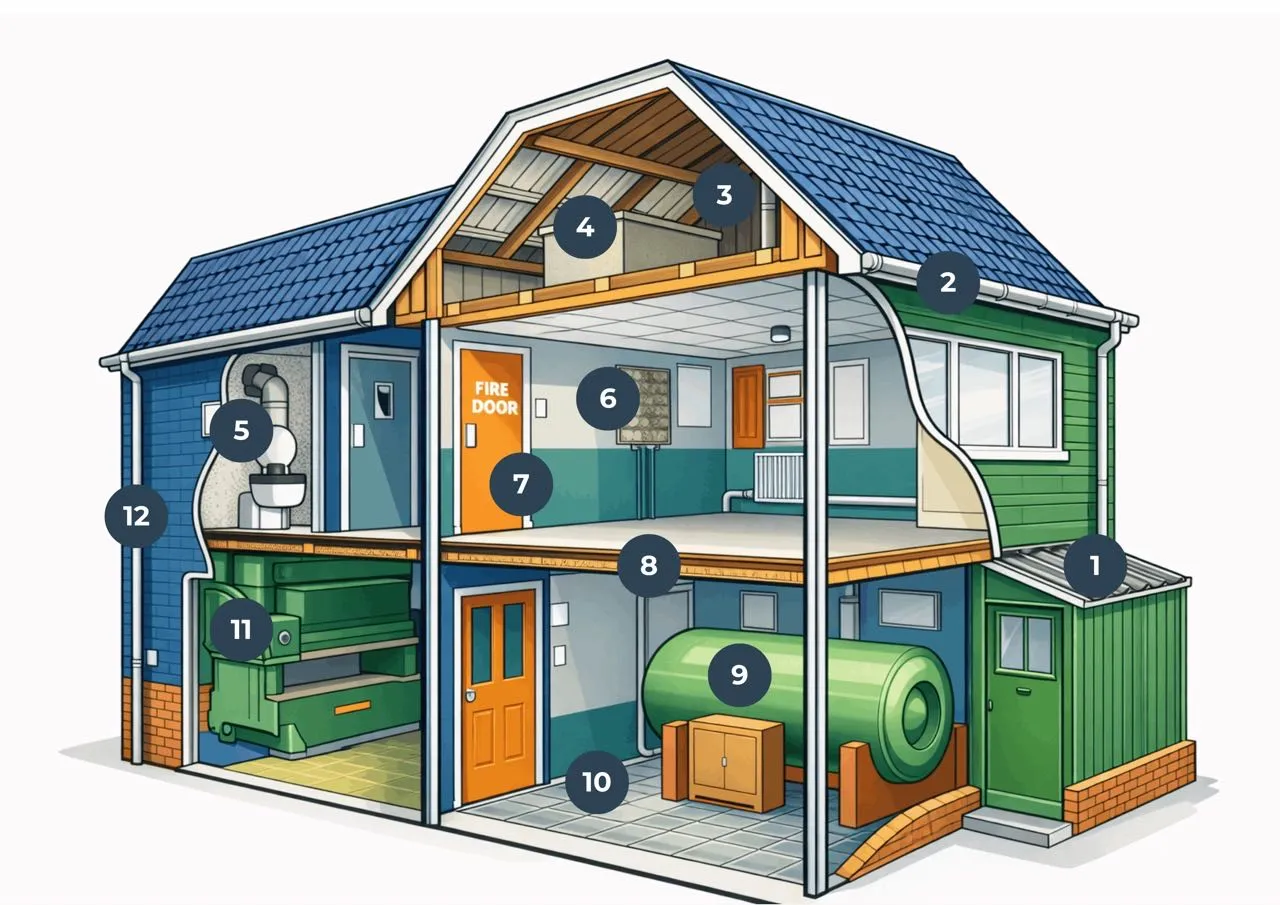
1 Corrugated Cement
Corrugated sheets used on roofs and outbuildings are often made from asbestos cement. These are generally low risk unless damaged, drilled, or removed.
2 Soffits and Fascias
Soffits and fascias can contain asbestos cement or insulating board. Maintenance work or weathering can disturb these materials and release fibres.
3 Flue Pipe
Flue pipes were commonly manufactured using asbestos cement or insulation for heat resistance. Deterioration or removal can present a risk if not handled correctly.
4 Water Tank
Older commercial buildings may have asbestos insulating board tanks or enclosures. These can degrade over time and release fibres if disturbed.
5 Boiler Flue Pipe
Boiler flues often contain asbestos insulation or cement materials. These are higher risk if damaged or during refurbishment works.
6 Electrical Fuses
Fuse boards and electrical panels frequently contain asbestos backing boards or flash guards. These can become hazardous during electrical upgrades or maintenance.
7 Fire Door
Fire doors in older buildings were often lined with asbestos insulating board for fire resistance. Damage or alteration can release harmful fibres.
8 Floor and Wall Cavities
Asbestos insulation may be present within cavities for fireproofing or thermal insulation. These materials are usually hidden but can be disturbed during refurbishment.
9 Boiler Insulation
Boilers and associated pipework were commonly insulated with asbestos materials. This is considered high risk due to its friable nature.
10 Floor Tiles
Vinyl tiles and adhesives often contain asbestos. They are generally low risk unless broken, sanded, or removed incorrectly.
11 Machinery Brake Pads, Seals and Gaskets
Industrial equipment frequently used asbestos in brake linings, seals, and gaskets due to its heat resistance. These can release fibres during maintenance or replacement.
12 Downpipes
Rainwater goods such as downpipes were often made from asbestos cement. These are typically low risk unless damaged or drilled.