Key Points in This Blog
- Damp proofing can disturb hidden asbestos.
- Artex is one of the most common risks.
- Check surfaces before drilling, hacking off or tanking.
- Testing starts from £155.
- Refurbishment surveys may be needed before intrusive work.
Requirements for Damp Proofing with Asbestos Regulations
Damp proofing can look like a straightforward job.
Then you start drilling walls, hacking off plaster, lifting flooring or preparing a wall for tanking. That is exactly where asbestos can become a problem.
We work with contractors across Yorkshire who need suspect materials checked before they can continue with their work.
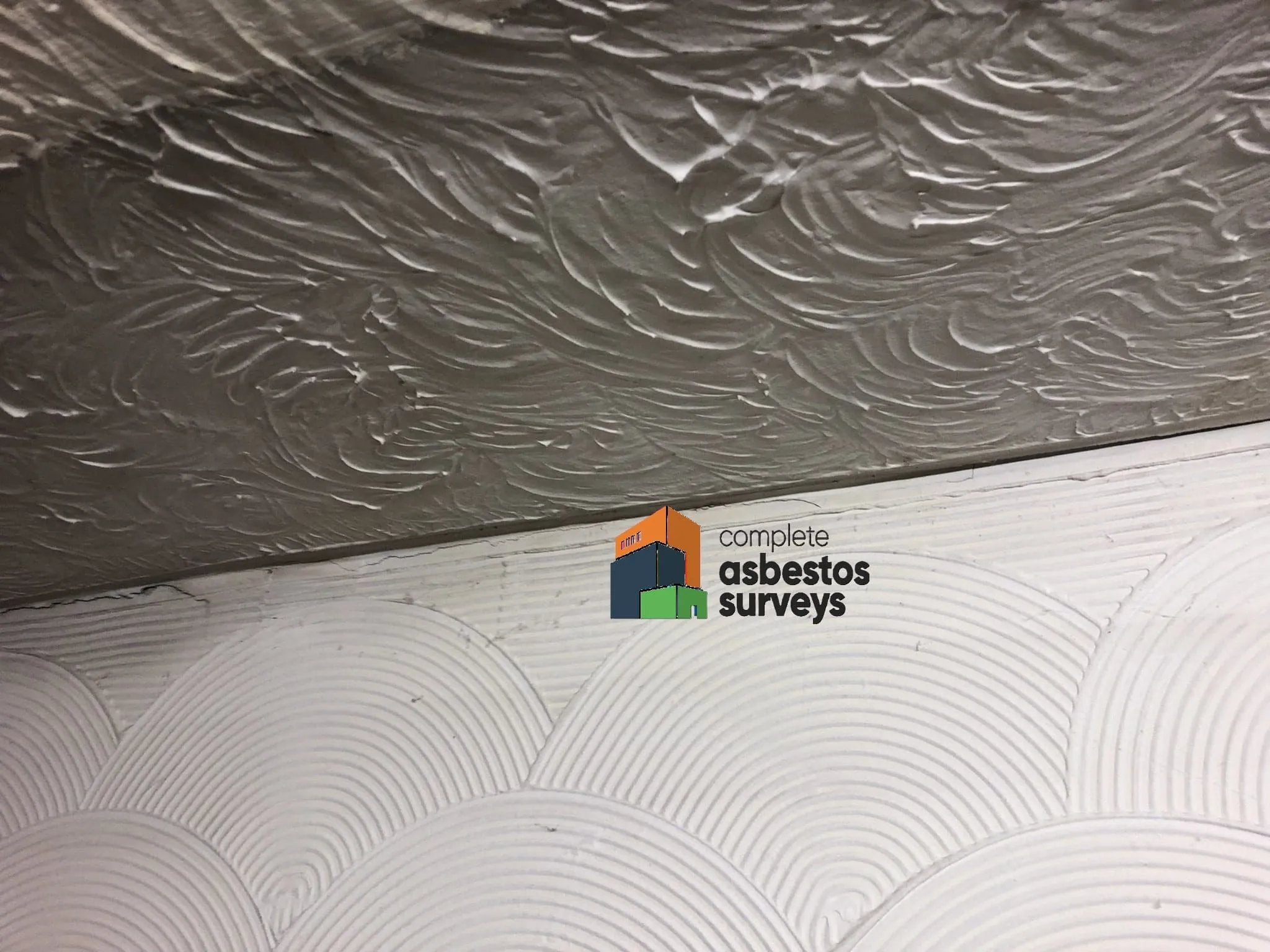
The most common issue we see around damp proofing is textured coating, often referred to as Artex. Sometimes it is visible.
Sometimes it has been plastered over and only becomes apparent once work has already started.
If your damp proofing work involves disturbing the fabric of a building built before 2000, you need to consider asbestos before you start. HSE guidance states that a refurbishment survey is required where planned work is likely to disturb the building fabric.
Why Damp Proofing Companies Need to Think About Asbestos
Damp proofers work in many of the same areas where asbestos-containing materials can be hidden.
A typical job may involve:
- Drilling walls for chemical injection
- Removing old plaster
- Hacking walls back to brick
- Applying tanking systems
- Lifting flooring
- Removing skirting
- Working around old heating pipes
- Cutting into ceilings or wall finishes
If you do not know what those materials contain, you could disturb asbestos before anyone realises it is there.
From our experience, one of the biggest mistakes is not surveying the exact areas where plaster will be removed or walls will be tanked.
A management survey covering normal occupation is not always enough for intrusive work.
Artex Is One of the Most Common Problems We See
Textured coating is one of the materials we come across most often on damp-proofing jobs.
It can be applied to:
- Ceilings
- Walls
- Hallways
- Staircases
- Utility rooms
- Kitchens
- Older extensions
It can also be hidden underneath later layers of plaster.
We have had damp-proofing companies contact us after they started work and discovered a textured coating underneath the plaster they were removing.
At that point, the work has to stop until the material has been checked.
You cannot confirm whether Artex contains asbestos just by looking at it.
Even if you have worked on hundreds of similar properties, appearance alone does not give you an asbestos result.
A sample needs to be taken and analysed.
Asbestos Testing Before Damp Proofing
If your work only affects a particular material, targeted asbestos testing may be enough.
For example, you may be planning to drill through a textured wall.
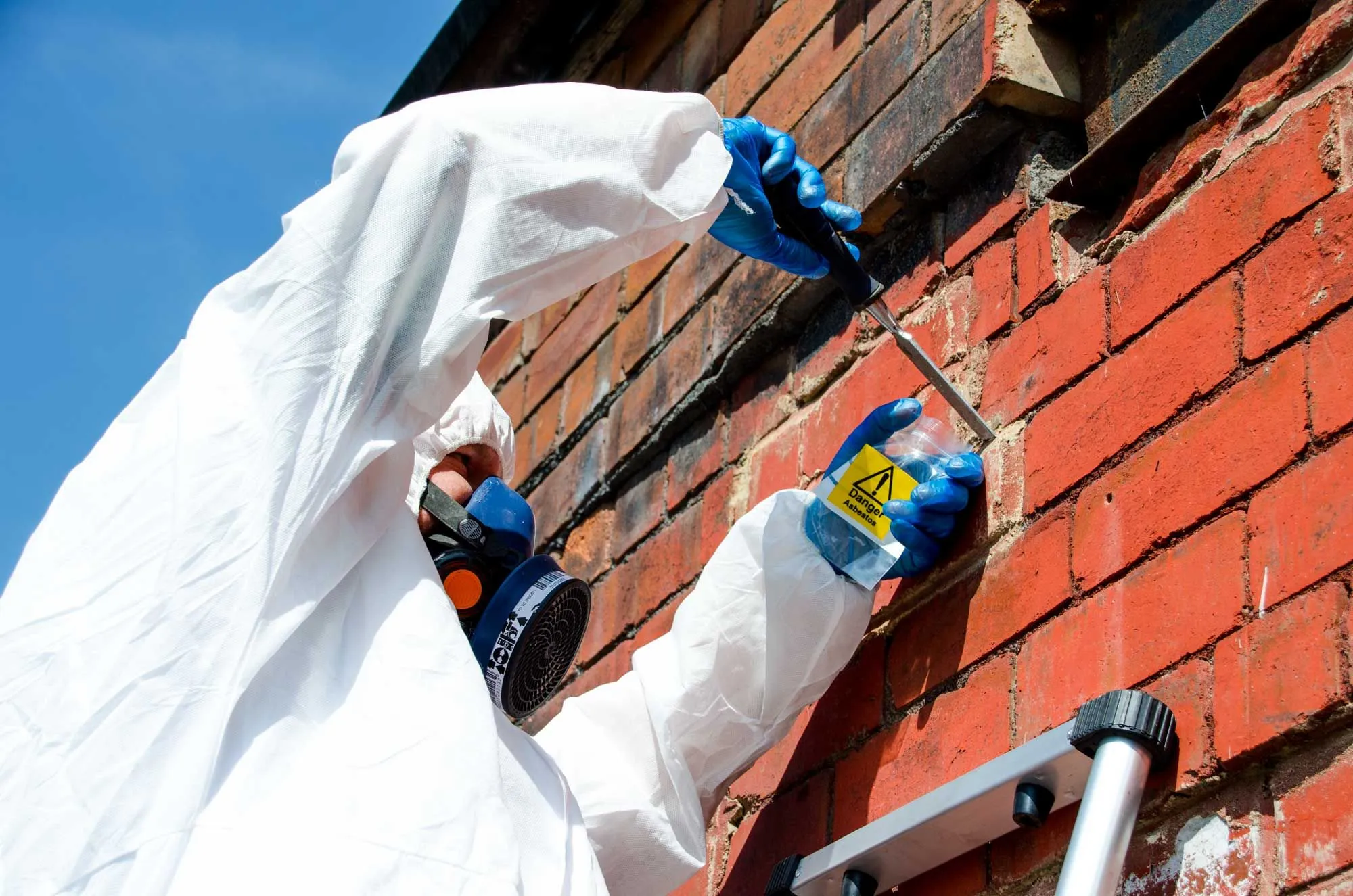
We can attend, take a representative sample and send it to a UKAS-accredited laboratory.
Our asbestos testing prices currently start from:
- 1 sample: £155
- 2 samples: £185
- 3 samples: £215
A simple sampling visit can often be completed quickly, with results normally returned within 48 hours.
You can read more about our asbestos sample testing.
Damp Proofing Job in Huddersfield: Testing Kept the Work Moving
We recently attended a property in Huddersfield for a damp-proofing company carrying out an insurance-related job.
They needed to disturb an area containing a suspect surface and wanted asbestos ruled out before continuing.
We attended and carried out asbestos sampling.
The laboratory result came back negative within a day.
The damp-proofing company could then continue with its work without unnecessary delay.
This is a good example of why checking first can save time.
If the contractor had simply carried on and the material had contained asbestos, the situation could have been very different.
A Similar Testing Example From York
We also carried out targeted asbestos testing at a house in York after a RICS HomeBuyer Survey highlighted three suspect materials.
The visit took around 20 minutes and cost £215 for three samples.
Two textured coatings tested negative. The garage ceiling tested positive for asbestos insulating board, or AIB.
Because the AIB was in poor condition, we recommended licensed removal or encapsulation before the buyer moved in. It shows why you cannot treat every suspect material the same.
Two materials that looked concerning were asbestos-free. The third needed action. Testing gave the client the answer.
When Is Asbestos Testing Not Enough?
Testing is useful when you have one or several specific surfaces to check.
But if your damp-proofing works will affect a wider area, a refurbishment survey may be the better option.
HSE guidance says refurbishment surveys are intended to find asbestos-containing materials within the areas where work will disturb the building fabric. These surveys can involve intrusive inspection behind walls, floors, ceilings and other concealed areas.
For damp proofing, that could mean surveying areas where you intend to:
- Hack plaster back to brick
- Drill a full damp-proof course
- Remove floor coverings
- Lift floorboards
- Tank cellar or basement walls
- Remove ceilings
- Alter wall linings
A localised residential refurbishment survey with Complete Asbestos Surveys starts from around £280, depending on the scope.
Do Not Forget Floors
Damp-proofing projects often involve flooring as well as walls.
Older properties can contain:
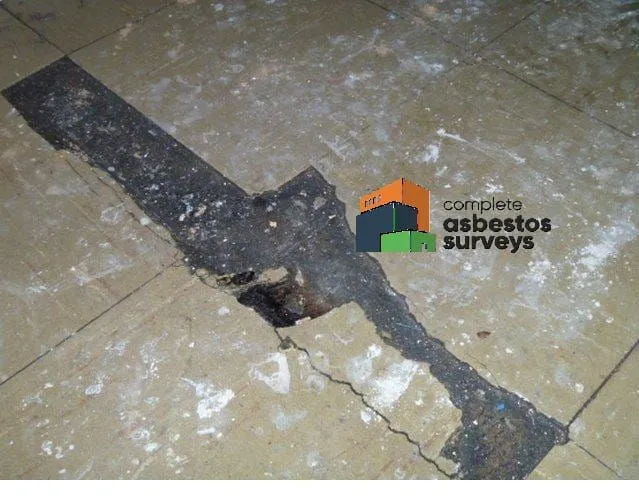
Vinyl Floor Tiles
Old vinyl tiles can contain asbestos.
They may be hidden underneath newer carpets, laminate or vinyl.
Bitumen Adhesive
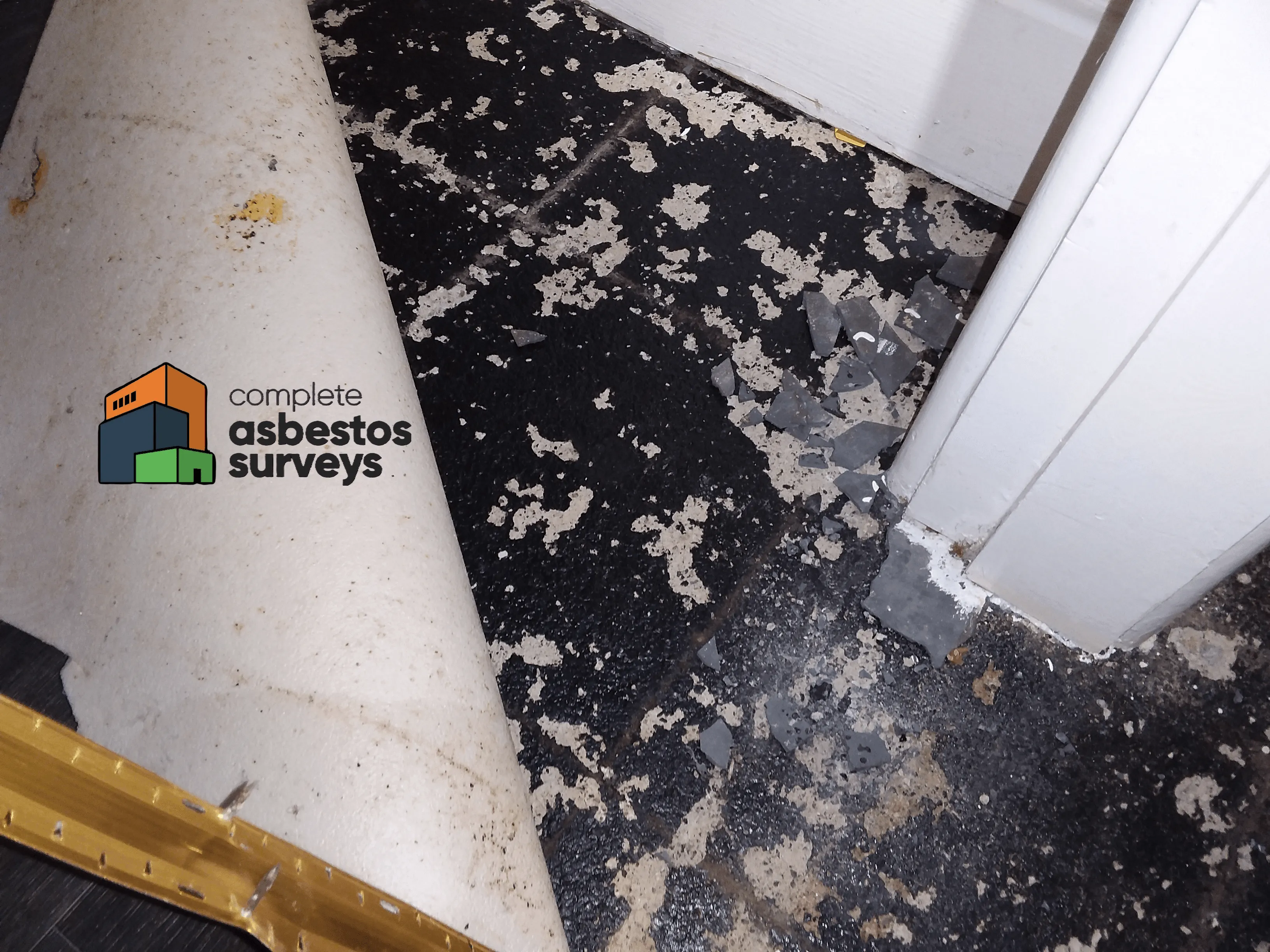
The black adhesive underneath old floor tiles can also contain asbestos.
Removing the tiles does not necessarily remove the asbestos risk if bitumen remains bonded to the floor.
Screed
Some older floor build-ups may contain asbestos within or around screed layers.
If you are breaking floors, chasing services or preparing them for a damp membrane, the flooring needs to be considered as part of the scope.
Watch for Old Pipe Lagging Under Floorboards
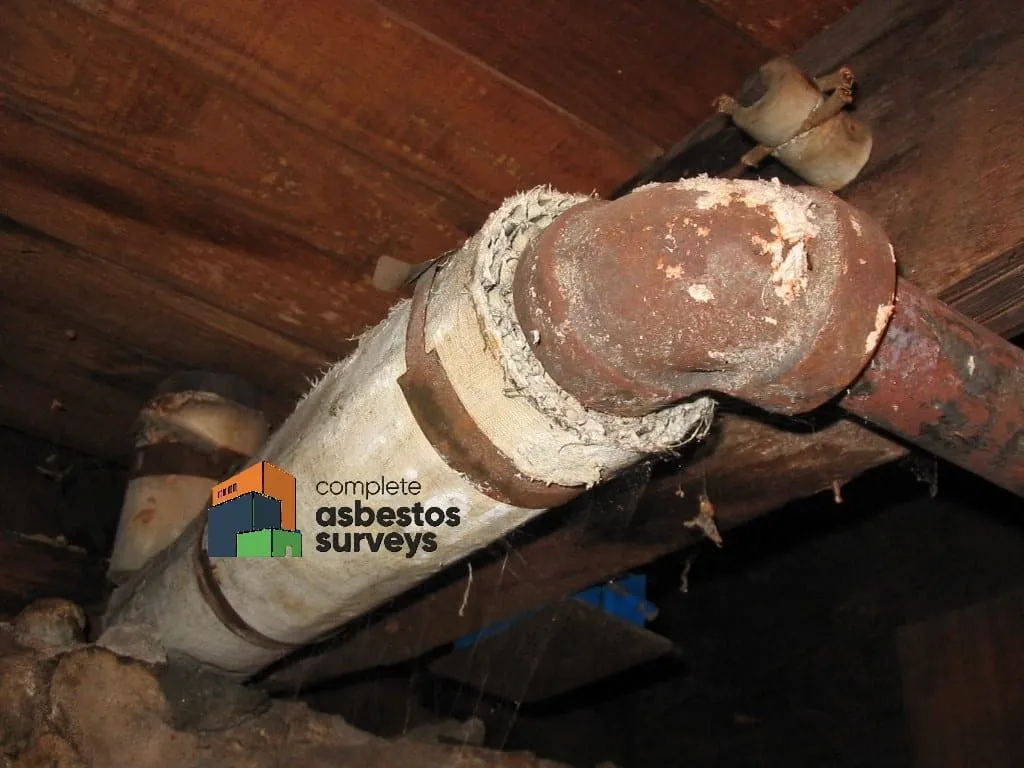
Old pipe insulation is another issue damp proofers can encounter.
We fairly often see old lagged heating pipes beneath floorboards in larger, older properties.
It is less common in smaller houses, but you should still know what you are looking for.
Pipe lagging can be a higher-risk asbestos material.
If floorboards are being lifted and you discover old insulation around heating pipes, do not disturb it until it has been assessed.
What About Chemical Injection?
Chemical damp-proof courses involve drilling multiple holes through walls.
The key question is what surfaces and materials the drill will pass through.
We would not normally recommend random targeted testing of the wall structure without reason.
But any suspect surface where injection work will take place should be checked.
That can include textured coatings or other finishes applied to the wall.
The principle is simple.
Know what you are drilling through before you start drilling.
Asbestos Awareness Training Does Not Replace a Survey
Damp-proofing operatives who could come across asbestos should have asbestos awareness training.
That training should help workers recognise common asbestos-containing materials and understand what to do if they discover something suspicious.
But asbestos awareness training does not allow someone to look at a surface and declare it asbestos-free.
It does not replace testing.
It also does not replace a refurbishment survey where intrusive work requires one.
In our experience, some companies are very good at checking.
Others still carry out work without asking for asbestos information first.
That is where problems start.
What Should a Damp Proofing Company Do Before Starting Work?
A simple pre-start process can prevent most issues.
Check the Building Age
If the property was built or refurbished before 2000, asbestos needs to be considered.
Ask What Asbestos Information Exists
For commercial properties, ask the dutyholder for the asbestos register and management information.
Look at Your Exact Work Area
Do not just ask whether the building has an asbestos survey.
Ask whether the areas you are about to drill, strip, hack off or tank have been properly assessed.
Arrange Testing or a Refurbishment Survey
If you have one suspect surface, testing may be enough.
If you are carrying out wider intrusive work, a refurbishment survey may be required.
Give Your Surveyor the Full Scope
Tell us exactly what you plan to do.
That helps us survey the right areas rather than giving you a report that does not cover your actual work.
Pros and Cons of Testing Versus a Refurbishment Survey
Asbestos Testing
Pros:
- Quick
- Lower cost
- Good for one or two specific materials
- Results normally within 48 hours
Cons:
- Only answers the question about the sampled material
- Does not check hidden materials elsewhere in the work area
Refurbishment Survey
Pros:
- Designed around intrusive work
- Checks concealed areas within the work scope
- Better suited to hacking off, tanking and major alterations
Cons:
- More intrusive
- Costs more than simple sampling
- Needs a clear scope before the survey startsAsbestos Surveys for Damp Proofing Companies Across Yorkshire
Asbestos Surveys for Damp Proofing Companies Across Yorkshire
Complete Asbestos Surveys works with contractors across West Yorkshire, North Yorkshire, South Yorkshire and the East Riding of Yorkshire.
We have around 20 years of asbestos industry experience and provide:
- Asbestos surveys
- Asbestos testing
- Refurbishment surveys
- Asbestos removal
- Advice on managing identified asbestos
If you have a damp-proofing job coming up and are unsure whether you need testing or a refurbishment survey, send us the scope of work.
We can help you identify the right check before your team starts disturbing the property.
Frequently Asked Questions
Do I need an asbestos survey before damp proofing work?
Yes. Any building built before 2000 should have an asbestos survey before damp proofing starts. This ensures you don’t drill into asbestos materials.
Can damp proofing disturb asbestos?
Yes. Drilling, injecting or removing plaster, render or floors can easily disturb hidden asbestos fibres if you haven’t checked first.
Who is responsible for asbestos checks?
The duty holder — usually the property owner or managing agent — must ensure a survey is available. Contractors must also check the information before working.
What type of asbestos survey do I need?
A refurbishment survey is required if your damp proofing involves intrusive work such as drilling or removing walls and floors.
Do you work with damp proofing companies in Yorkshire?
Yes. We provide asbestos surveys for damp proofers across the Yorkshire and throughout the north of England.