Key Points in This Blog
- Some asbestos removal requires an HSE-licensed contractor.
- Lower-risk materials may be removed as non-licensed work.
- Some non-licensed work still needs to be notified.
- Material type and condition determine the removal requirements.
- An asbestos survey can identify the correct removal approach.
Licensed or Non-Licensed Asbestos Removal
Asbestos is found in many buildings across the UK due to its fire resistance, waterproofing, and affordability. However, it poses serious health risks.
What Is Licensed Asbestos Removal Work?
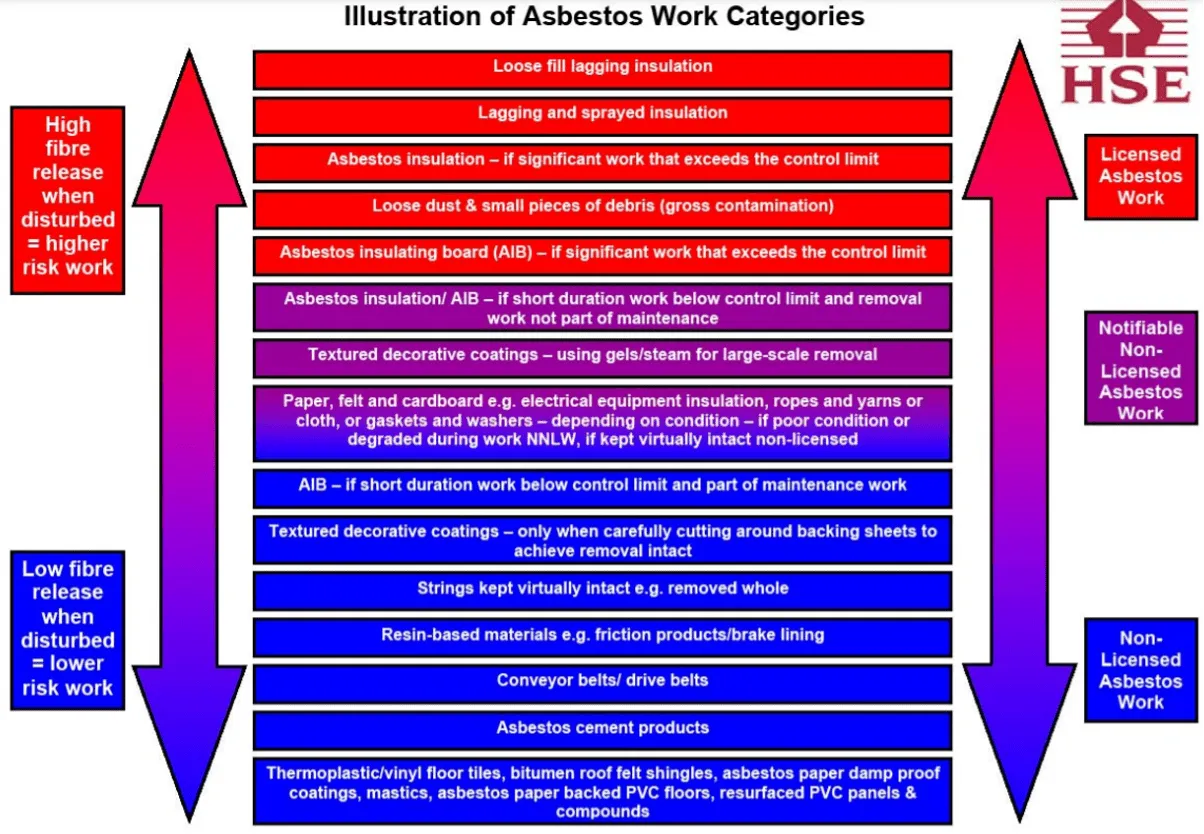
Higher-risk asbestos work requires a contractor holding a current licence from the Health and Safety Executive (HSE). This includes removal of sprayed asbestos coatings, asbestos pipe insulation and most removal of asbestos insulating board (AIB).
Licensed work requires specific controls, notification and worker medical surveillance. The classification must be established before work starts.
Our asbestos insulating board gallery shows examples of this material, but photographs cannot confirm identification or determine the work category.
What Is Non-Licensed Asbestos Removal?
Notifiable non-licensed work (NNLW) is work that does not require an HSE asbestos licence but has additional requirements.
Depending on the assessment, examples include removal of substantially damaged asbestos cement and large-scale removal of textured coatings using methods that deteriorate the material.
For NNLW, employers must:
- Notify the relevant enforcing authority before work starts.
- Identify and restrict access to the work area.
- Arrange worker medical examinations before undertaking NNLW and at least every three years while that work continues.
- Keep individual worker health records for 40 years.
Notification is not an application for permission, and there is no minimum notification period for NNLW. Appropriate training and exposure controls remain essential.

Notifiable Non-Licensed Asbestos Removal
Some non-licensed work must still be reported to the HSE. This is known as notifiable non-licensed asbestos removal.
- Applies to tasks where asbestos materials are degraded or broken.
- Requires proper risk assessments and controls.
- Workers need medicals and asbestos training.
What Type of Asbestos Removal Do I Need?
The category depends on the proposed task, not simply the name of the material. The assessment must consider:
- The asbestos-containing product and its condition.
- How readily it could release fibres.
- The removal method and likely deterioration or breakage.
- The duration of the work and expected exposure.
- Whether the conditions for exemption from licensing are met.
First establish whether the work requires a licence. If it does not, determine whether it is notifiable non-licensed work or other non-licensed work.
A material should not automatically be classified as non-licensed because it is hard or described as “low risk”. Equally, damage alone does not determine the category.
How an Asbestos Survey Helps
An asbestos survey provides information about the materials identified, their location and condition. The contractor must use this information alongside the proposed work method to complete a suitable risk assessment and confirm the work category.
Our asbestos case studies show examples of previous projects. Each new job needs its own assessment.
Before appointing a contractor, check their relevant experience, training and insurance, plus their current HSE licence where the work requires one. Trade memberships and other accreditations do not replace that licence.
Contact our team to discuss your survey findings and planned work.
Frequently Asked Questions
What Is the Difference Between Licensed and Non-Licensed Asbestos Removal?
Licensed work requires an HSE-licensed contractor. Non-licensed work does not require that licence, but still requires appropriate training, assessment and controls. Some non-licensed work is notifiable and carries additional duties.
Do I need insurance for non-licensed asbestos removal?
Ask for evidence that the contractor’s insurance covers the proposed asbestos work. Check the scope and exclusions rather than assuming a general building contractor’s policy includes asbestos. Insurance does not replace the need for competence or an HSE licence where required.
What Happens If Licensable Work Is Carried Out Without a Licence?
Carrying out licensable asbestos work without the required HSE licence can lead to enforcement action and prosecution. Confirm the work category and contractor’s licence before the work begins.
When Is Non-Licensed Asbestos Work Notifiable?
This depends on the task, material and condition, including whether the work will deteriorate the material. The contractor must first establish that the work is exempt from licensing, then assess whether the additional NNLW requirements apply.
How Do I Know Whether My Project Needs a Licensed Contractor?
Start with reliable information about the material, usually from an appropriate asbestos survey or sample testing. The contractor must then assess the proposed task and explain its classification. A material name, photograph or survey report alone does not account for every aspect of the planned work.