Key Points in This Blog
- Asbestos is a naturally occurring fibrous mineral.
- Three main asbestos types are found in UK buildings.
- Asbestos was widely used in construction before 2000.
- Damaged asbestos can release harmful fibres into the air.
- Testing is the only way to confirm if a material contains asbestos.
What is Asbestos? Types, Dangers, and Where It’s Found
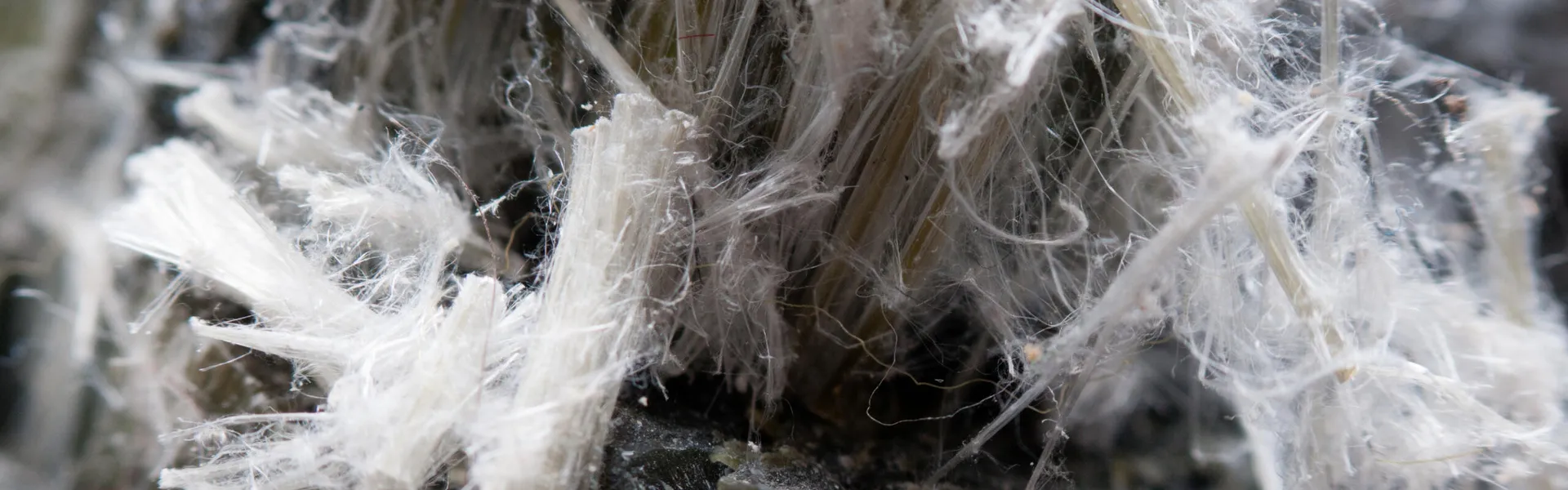
Asbestos is a naturally occurring mineral made up of microscopic fibres. These fibres are often combined with other materials to produce asbestos-containing materials (ACMs). Asbestos was widely used due to its strength, heat resistance, and durability.
How Was Asbestos Used?
Asbestos was mined in countries like Canada, Russia, Brazil, South Africa, and China. The fibres were woven into fabrics or mixed into products used worldwide. In the UK, asbestos was predominantly used as a building material between the 1950s and 1980s. It provided:
- Insulation
- Fireproofing
- Soundproofing
- Waterproofing
- Chemical resistance
However, asbestos becomes dangerous when damaged or disturbed. The fibres can become airborne and inhaled, leading to serious health issues.
Types of Asbestos
Asbestos is classified into six mineral types within two families: serpentine and amphibole. The distinction between these two families is based on the shape and structure of their fibres:
Amphibole asbestos fibres are straight, brittle, and needle-like, with colours ranging from green to blue to brown. This family includes amosite, crocidolite, tremolite, actinolite, and anthophyllite.
Serpentine asbestos fibres are long, curly, and flexible. Only one type falls into this family: chrysotile, which is often white in appearance.
The three most common types found in building work are:
Chrysotile (White Asbestos)
- Common Uses: Cement, linings, garage roofs, and floor tiles.
- Properties: Flexible, waterproof, and heat resistant.
Amosite (Brown Asbestos)
- Common Uses: Cement sheets, pipe insulation, and insulating boards.
- Properties: Strong and heat resistant.
Crocidolite (Blue Asbestos)
- Common Uses: Insulation and industrial materials.
- Properties: Thin, brittle fibres.
Other less common types—Tremolite, Actinolite, and Anthophyllite—were usually present as contaminants in asbestos products, rather than being deliberately used. While rarely found in UK properties, these can still appear during comprehensive asbestos surveys.
You can see the asbestos uses here and learn more about each one on our gallery page.
Understanding these types is crucial, as their different fibre shapes and structures affect how easily they become airborne and how dangerous they are to human health.
What’s the Difference Between Friable and Nonfriable Asbestos?
Friability describes how readily a material can crumble and release fibres. It must be assessed by a competent person—not by trying to break or crush a suspect material yourself.
Materials such as asbestos insulation can release fibres readily when disturbed. In products such as asbestos cement and vinyl floor tiles, the fibres are more firmly bound into the material. However, cutting, drilling, sanding or breaking these products can still release fibres.
The risk depends on the product, its condition and the work being carried out. “Non-friable” does not mean harmless or suitable for DIY removal.
Our asbestos material gallery shows examples of different products. Photographs cannot confirm whether a material contains asbestos; professional sample testing may be needed.
The Dangers of Asbestos
Breathing in asbestos fibres can cause serious diseases, including mesothelioma, asbestos-related lung cancer, asbestosis and diffuse pleural thickening. These conditions may take decades to develop.
The presence of asbestos in a building does not automatically mean people are being exposed. Materials in good condition that remain undisturbed generally present a much lower exposure risk than materials being damaged or worked on.
For official safety information, read HSE’s introduction to asbestos.
What If You Are Concerned About Your Health?
Symptoms cannot confirm asbestos exposure or establish an asbestos-related diagnosis. Speak to your GP about persistent symptoms or concerns about a past exposure incident, and explain your work history.
HSE does not recommend routine chest X-rays following accidental exposure. An X-ray cannot show whether asbestos fibres have been inhaled. Your doctor will decide whether investigations or specialist advice are appropriate.
See HSE’s advice on suspected exposure.
Treatment and outlook depend on the diagnosis and the individual. It is inaccurate to say that everyone diagnosed with mesothelioma will die within months. The NHS mesothelioma treatment guide explains available treatments and support.

Support Following an Asbestos-Related Diagnosis
Some people diagnosed with an asbestos-related disease may qualify for benefits, compensation or a legal claim. Eligibility depends on the diagnosis, exposure history and the rules of the relevant scheme.
Official information is available on Industrial Injuries Disablement Benefit and diffuse mesothelioma payments.
A specialist solicitor or benefits adviser can explain the options and applicable deadlines. There is no standard settlement amount that applies to everyone.
Managing Asbestos in Your Property
Do not disturb suspect materials. Before refurbishment or demolition, make sure the affected areas have been appropriately assessed.
Our guide to choosing an asbestos survey explains the different survey purposes. Where asbestos remains in place, our asbestos management guide explains monitoring, record keeping and preventing disturbance.
Our case studies show how these principles apply to real properties. Surveying and testing assess building materials; they cannot diagnose illness or measure a person’s past exposure.
Where is Asbestos Found?
Asbestos can be present in any building built or renovated before the year 2000. Common locations include:
- Insulation
- Cement sheets
- Floor and ceiling tiles
- Roofing materials
- Plumbing and boiler lagging
You can learn where common types of asbestos are found in a domestic property and commercial property on our Where is asbestos page.
How Can You Identify Asbestos?
You cannot confirm asbestos by a material’s appearance, smell or colour. A representative sample analysed by a UKAS-accredited laboratory can establish whether the sampled material contains asbestos.
Sampling should be carried out by a suitably trained, competent person. Our asbestos testing service can help with individual suspect materials.
For a wider assessment, an asbestos survey records findings within an agreed scope. Testing one item does not establish whether asbestos is present elsewhere in the building.
Does Asbestos Always Need Removing?
No. Depending on its condition, location and likelihood of disturbance, asbestos may be managed in place. Damaged materials or those affected by planned work need further assessment to determine the appropriate action.
Our asbestos management plans help property managers organise monitoring, responsibilities and access to asbestos information.
Where Is Asbestos Commonly Found?
Older buildings may contain asbestos in cement roofing, textured coatings, floor tiles, insulation and insulating boards. See our asbestos gallery for examples, remembering that images cannot confirm identification.
What Should I Do Before Renovating?
Tell your surveyor exactly what work is planned and which parts of the building will be disturbed. A refurbishment survey may be needed to inspect concealed materials within the affected areas.
Do not assume an existing management survey covers intrusive renovation work. Contact our team to discuss the appropriate scope.
Can an Asbestos Survey Tell Me Whether My Health Has Been Affected?
No. Surveys and laboratory material tests assess asbestos in a property. Speak to your GP about symptoms or concerns about personal exposure.
Frequently Asked Questions
What health risks are associated with asbestos exposure?
Exposure can cause mesothelioma, asbestos-related lung cancer, asbestosis, and pleural thickening. These diseases develop slowly and are often fatal.
Where is asbestos commonly found in buildings?
Asbestos is often found in insulation, cement sheets, and roofing materials in buildings constructed before 2000. Testing is required to confirm its presence.
What precautions should be taken during renovations?
Conduct an asbestos survey before renovations. Use trained professionals to handle asbestos safely, and follow all containment and disposal regulations.
For more information, visit our Frequently Asked Questions section here