Is Asbestos in My Ceiling?
Asbestos was commonly used in UK construction until its ban in the late 1990s. While effective as a building material, it poses serious health risks when its fibres are inhaled, potentially causing diseases like lung cancer and mesothelioma.
Asbestos was often added to ceiling coatings to provide greater strength and help the material dry faster. This resulted in a final finish that was not only heat resistant but also offered good insulation—qualities that made it a popular choice for homes and buildings throughout the twentieth century.
One area where asbestos is frequently found is in ceilings. If your home or building was constructed before 2000, it’s worth investigating whether your ceiling contains asbestos.
Types of Asbestos Ceilings
The most common types of asbestos ceilings in the UK are:
Asbestos Ceiling Identification
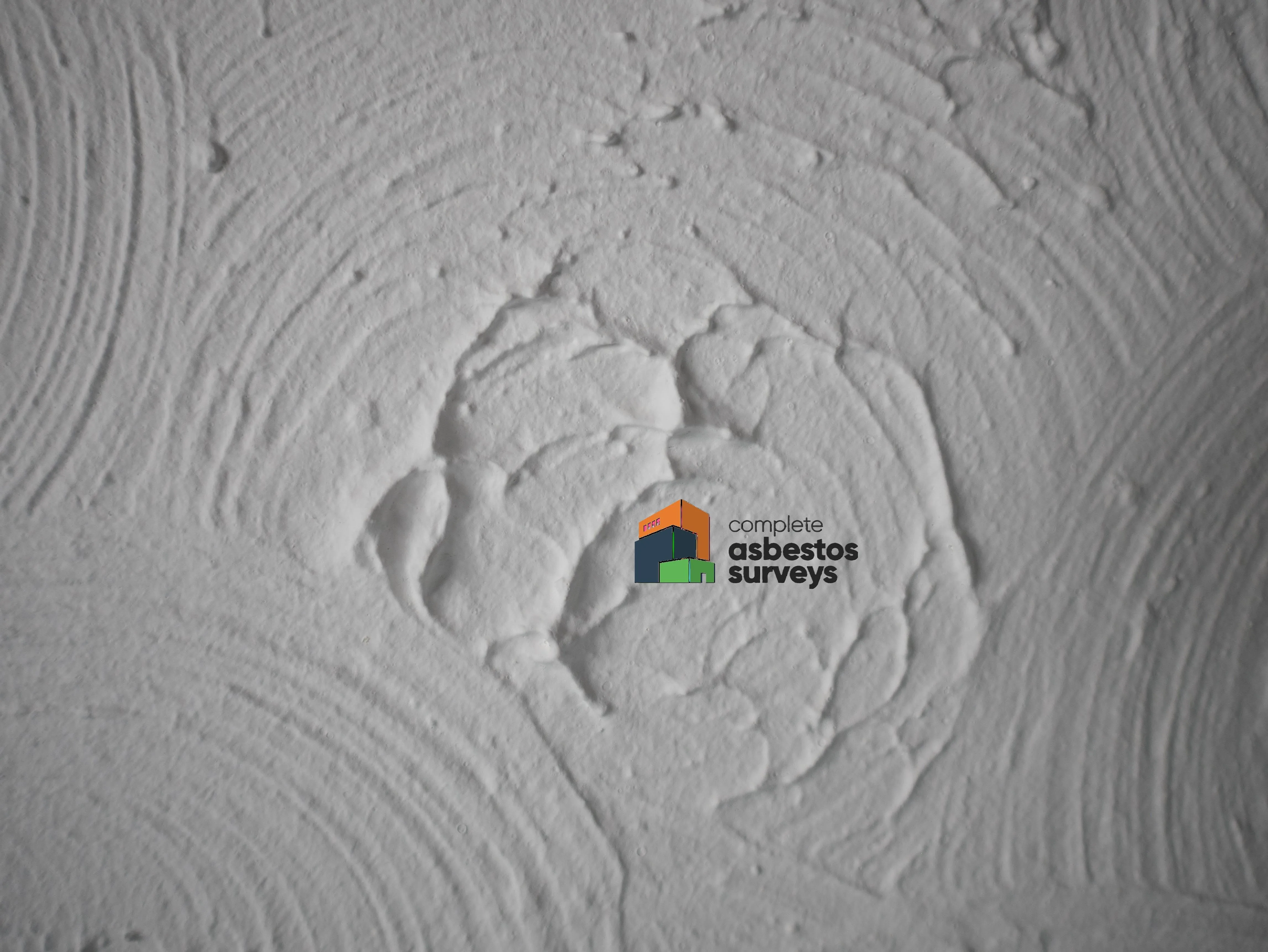
- Textured coatings including Artex: Some older decorative ceiling and wall coatings contain asbestos. Others do not. The pattern, colour or brand name cannot confirm whether asbestos is present.
-
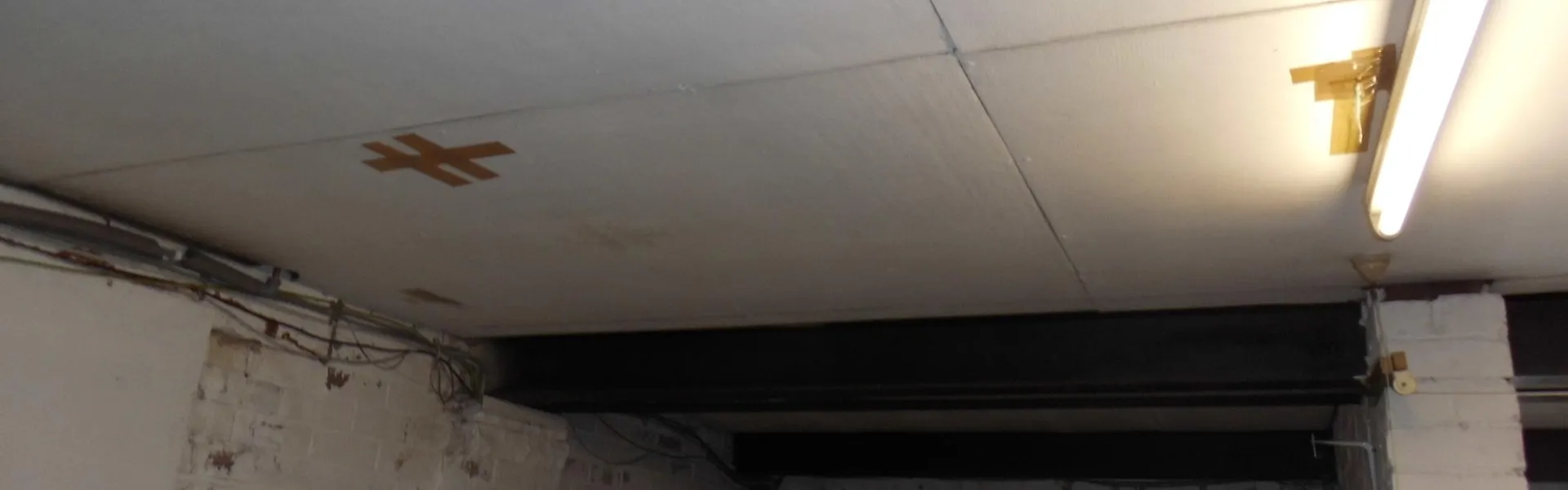
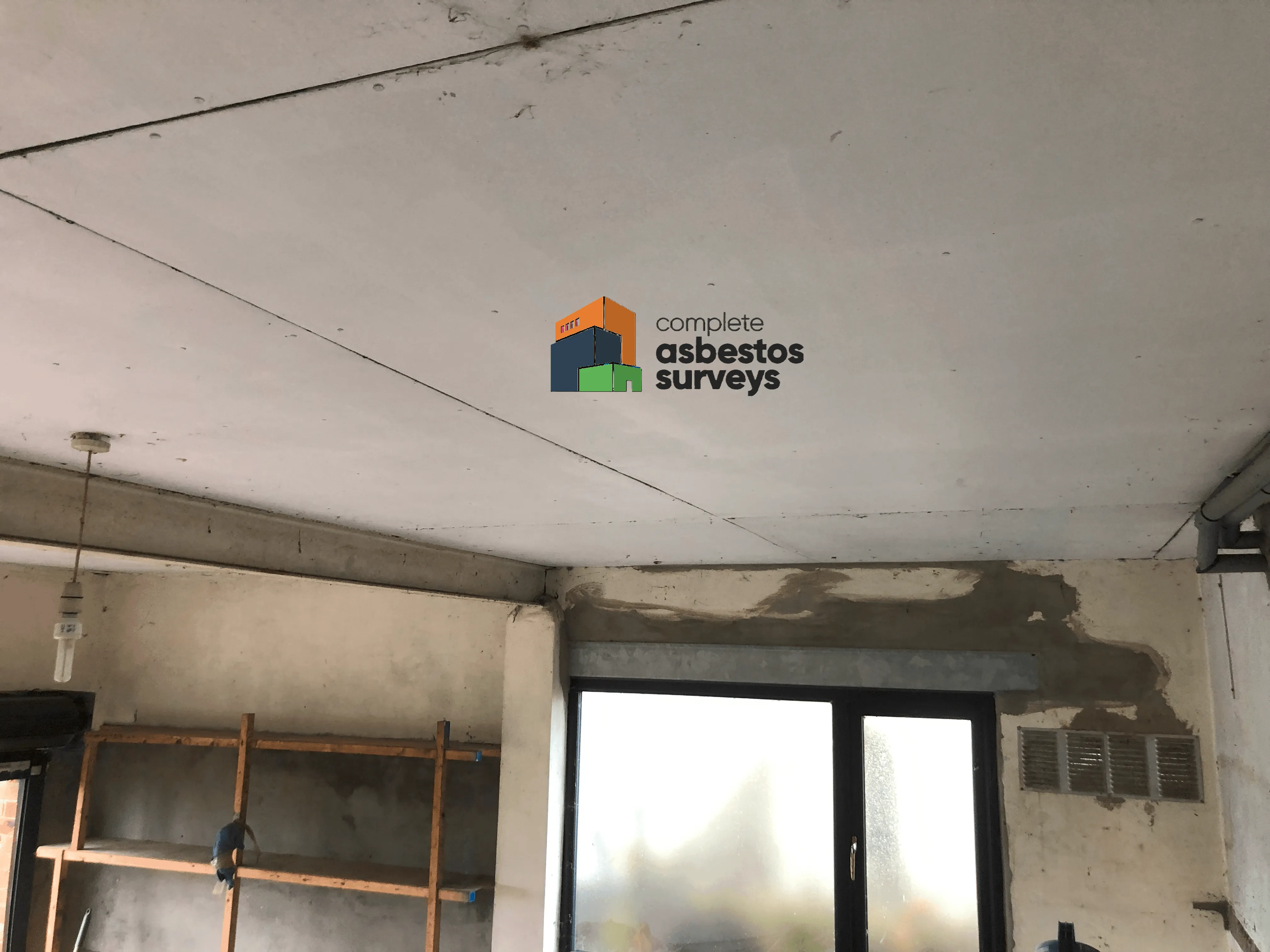
Asbestos insulating board (AIB): AIB was used in ceiling panels and fire-resistant linings. It is a different material from asbestos cement and can release fibres more readily when disturbed. Most work involving AIB requires an HSE-licensed contractor.
-
Asbestos cement: These products contain asbestos fibres bound into a cement matrix. Flat sheets were sometimes used as ceiling linings. Although fibres are more firmly bound than in AIB, cutting, drilling or breaking the sheets can release them.
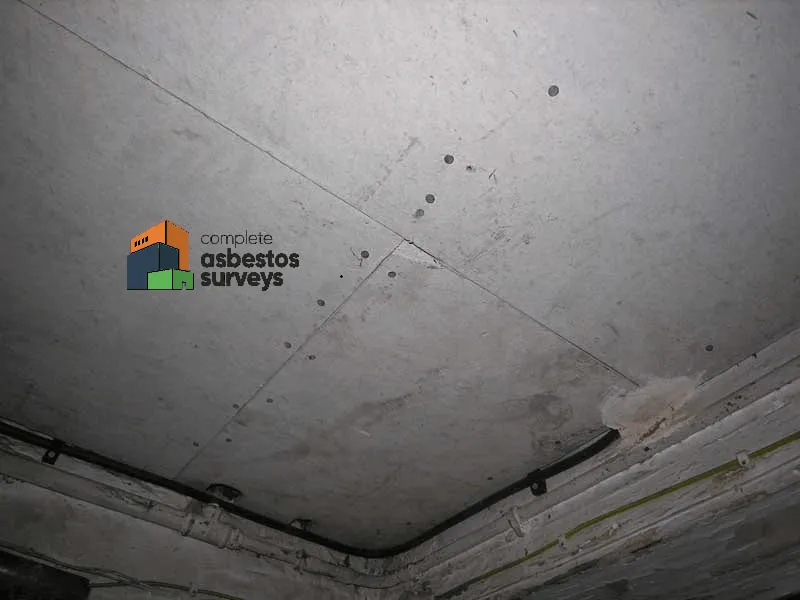
You cannot reliably distinguish these materials or confirm asbestos from photographs alone. Professional asbestos sampling and testing can confirm whether a sampled material contains asbestos. A competent assessment is also needed to establish the product type and appropriate precautions.
How to Tell if Your Ceiling Contains Asbestos
What Types of Asbestos Surveys Are Available for Ceilings?
If you think your ceiling could contain asbestos, it's important to know which type of asbestos survey you need. Each survey serves a different purpose, depending on your plans for the space:
- Asbestos Management Survey
This is the most common survey for properties that are in regular use and aren’t undergoing any major changes. It identifies and assesses potential asbestos-containing materials (ACMs) that might be present. It's designed to help you manage asbestos safely as long as it remains undisturbed. - Asbestos Refurbishment Survey
Planning a renovation or any work that might disturb the ceiling? This survey is necessary before any refurbishment. It’s more intrusive, as it aims to locate all ACMs in the area that could be affected by proposed work. - Asbestos Demolition Survey
If you're looking to knock down a building or part of it, this survey is essential. It's the most comprehensive, as it identifies all ACMs so they can be removed safely before any demolition begins.
Once the right survey is completed—whether it’s management, refurbishment, or demolition—the surveyor will advise you on the safest next steps based on what they find.
If your ceiling was installed before 2000, there’s a chance it may contain asbestos. However, not all ceilings from this period do. To confirm, you need professional testing.
Steps to Identify Asbestos in Your Ceiling:
- Hire a Qualified Asbestos Surveyor
A professional will collect samples of your ceiling material and have them tested in a lab. - Assess the Results
If asbestos is present, the surveyor will recommend how to manage or remove it safely.
Managing Asbestos in Ceilings
Finding asbestos does not automatically mean the ceiling must be removed. The appropriate action depends on the material, its condition, accessibility and whether future work could disturb it.
Following an assessment, the options may include:
-
Management in place: Material in good condition that is unlikely to be disturbed may remain, with its location recorded and its condition monitored.
-
Encapsulation: A specialist may recommend a suitable protective treatment where appropriate. This still requires assessment and controlled work.
-
Removal: Removal may be necessary where the material is damaged or will be affected by renovation or demolition.
An asbestos survey can help establish the appropriate approach.
Who Is Responsible for Managing Asbestos?
In Great Britain, the duty to manage asbestos applies to non-domestic premises and the common parts of domestic buildings, such as shared corridors and stairwells in blocks of flats. Responsibility depends on who has responsibility for maintenance and repair, or control of the premises.
This specific duty does not generally apply inside an owner-occupied private home. However, contractors working in a home must assess and control asbestos risks before disturbing building materials.
Is Asbestos in My Ceiling Dangerous?
All asbestos types can harm health if fibres are inhaled. The likelihood of fibre release depends on the product, its condition and how it is disturbed.
An intact ceiling left undisturbed generally presents a lower exposure risk than one being drilled, sanded, cut or removed. Do not attempt repairs to suspect materials before obtaining advice.
If the ceiling is damaged, avoid disturbing it further and arrange a professional assessment. Monitoring arrangements should reflect the findings and recommendations for your property.
Can I Remove My Asbestos Ceiling Myself?
We recommend using a competent asbestos contractor rather than attempting ceiling removal yourself.
Not every asbestos removal task requires an HSE licence. Most AIB removal is licensed work. Some work involving asbestos cement or textured coatings may be non-licensed, while some falls into the category of notifiable non-licensed work.
The classification depends on the material, its condition, the work method and likely exposure. Non-licensed work still requires appropriate training, assessment and controls when carried out as work.
Read HSE’s explanation of when a licensed contractor is required.
Choosing an Asbestos Contractor
Before appointing a contractor:
-
Ask how they have assessed the material and classified the work.
-
Check relevant training, experience and insurance, plus an HSE licence where required.
-
Obtain a written quotation identifying the areas and materials included.
-
Confirm the arrangements for waste disposal and the completion documents appropriate to the work.
Any completion evidence relates to the agreed work area and scope. Removing asbestos from a ceiling does not establish that the entire property is asbestos-free.
Getting Your Ceiling Checked
Our asbestos testing service can help establish whether a suspect ceiling material contains asbestos. If you are planning intrusive work, an asbestos survey can assess the affected areas.
Contact us to discuss your ceiling and planned work. Photographs can help us understand your enquiry, but cannot confirm asbestos or replace an inspection and sampling where needed.
Frequently Asked Questions
How do I know if my ceiling contains asbestos?
If your ceiling was installed before 2000, it may contain asbestos, particularly if it's made of textured coatings like Artex, ceiling tiles, asbestos insulating board (AIB), or asbestos cement (AC). To confirm asbestos presence, it's best to have it tested by a qualified asbestos surveyor.
Is the asbestos in my ceiling dangerous?
The danger of asbestos in your ceiling depends on factors such as the type of asbestos, its condition, and the level of exposure. While undisturbed asbestos may not pose an immediate threat, damaged or friable asbestos can release harmful fibres. It's crucial to have your ceiling assessed by professionals to determine the risk.
Can I remove my asbestos ceiling myself?
No, it is illegal for individuals to remove asbestos without proper licensing and training.